
The Role of Open-source Technology in SaaS and iPaaS
Table of Contents
The emergence of Integration Platform as a Service (iPaaS) and Software as a Service (SaaS) in recent years has revolutionized business operations by providing scalable, adaptable, and affordable solutions. This change is mostly being driven by the use of open-source technology. Open-source technology is a key part of both SaaS and iPaaS, and this blog posts about its pros, cons, and possible futures.
Recognizing iPaaS and SaaS
Businesses no longer need to install and maintain software on individual PCs or servers because SaaS offers software applications via the internet. Numerous benefits come with this strategy, such as lower initial expenses, automatic updates, and accessibility from any location with an internet connection.
A cloud-based integration solution called iPaaS links different systems, apps, and services so they may function as a single unit. By offering a single platform for data interchange, workflow automation, and API management, iPaaS streamlines the integration process.
The Development of Open-Source Software
Software with open-source code is available for anyone to review, alter, and improve. By working together, developers may expand on pre-existing solutions and stimulate creativity, resulting in software that is more resilient and adaptable.
- The Contribution of Open-Source Technology to SaaS Cost Efficiency: Developing and implementing SaaS applications is now much less expensive thanks to open-source technology. Utilizing pre-existing open-source frameworks and technologies allows businesses to save money on development time and license costs, which enables them to charge more for their services.
- Flexibility and Customization: SaaS companies can tailor their apps to match certain business requirements thanks to the unmatched flexibility offered by open-source software. This flexibility is essential in a market where user needs are ever-changing.
- Community Support: SaaS developers can benefit greatly from the open-source community. Open-source projects gain from constant feedback, bug patches, and feature additions due to their large contributor and user base. This cooperative setting guarantees that the software stays current with industry standards while also accelerating development.
- Security & Openness: Users can examine the code for potential vulnerabilities with greater openness while using open-source software. The overall security posture of SaaS apps is improved by this transparency, which promotes confidence and makes it possible to identify and resolve security vulnerabilities more quickly.
The Function of Open-Source in Interoperability with iPaaS:
Regardless of the underlying technology of the systems and applications, open-source iPaaS solutions provide smooth integration. Open-source iPaaS platforms guarantee compatibility and interoperability by supporting a broad range of protocols and standards, which facilitates the connecting of diverse systems for enterprises.
- Scalability: Due to the inherent scalability of open-source iPaaS platforms, companies can extend their integration capacities in tandem with their needs. For businesses to accept growing data volumes and complexity and future-proof their integration plans, scalability is a critical requirement.
- Innovation and Agility: Open-source development fosters innovation and agility because it is a collaborative process. Modern technology and industry best practices are frequently incorporated into open-source iPaaS solutions, helping companies to stay one step ahead of the competition and quickly adjust to shifting market demands.
- Cost Savings: By doing away with license fees and lowering dependency on proprietary software, open-source infrastructure-as-a-service (iPaaS) solutions, like SaaS, offer significant cost savings. Because of its affordability, iPaaS is available to a wider spectrum of companies, from start-ups to major corporations.
Open-Source Technology's Challenges in SaaS and iPaaS
Using open-source technology in SaaS and iPaaS has several benefits, but there are drawbacks as well.
- Support and Maintenance: Although the open-source community offers helpful assistance, companies may still have problems locating specialized personnel for continuous upkeep and troubleshooting. Investing in knowledgeable developers or collaborating with service providers who specialize in open-source solutions are two ways to lessen this.
- Integration Complexity: When working with proprietary or legacy programs, integrating open-source components with current systems can be challenging. In order to prevent disruptions and guarantee uninterrupted connectivity, businesses need to properly design and implement their integration strategy.
- Security Issues: Despite providing more openness, open-source software is not impervious to security flaws. To protect their SaaS and iPaaS solutions, businesses need to put strong security procedures in place, like frequent code reviews, vulnerability assessments, and patch management.
- Legal and Compliance Concerns: Organizations using open-source software must make sure they are adhering to the terms and conditions of each license, which varies. Failing to do so may lead to possible intellectual property conflicts and legal difficulties.
Open-Source Technology's Future Prospects in SaaS and iPaaS
Open-source iPaaS appears to have a bright future ahead of it, with a number of developments expected to influence its development:
- Increased Adoption: It is anticipated that adoption rates will increase as more companies come to understand the advantages of open-source technology. The open-source community will continue to innovate and grow as a result of this expansion, producing more sophisticated and feature-rich solutions.
- Enhanced Security: The open-source community will place a greater emphasis on security, which will result in the creation of SaaS and iPaaS platforms that are more resilient and safe. By working together, vulnerabilities will be identified and mitigated more quickly, improving the general security of open-source systems.
- Integration of AI and Machine Learning Technologies with Open-Source SaaS and iPaaS Platforms: This will open up new avenues for automation, intelligent decision-making, and predictive analytics. These developments will improve the functionality and worth of open-source solutions even more.
- Hybrid and Multi-Cloud Environments: Businesses will be able to easily integrate and manage applications across various cloud environments thanks to the use of open-source iPaaS platforms, which will be essential in enabling hybrid and multi-cloud strategies. For businesses trying to maximize their IT infrastructure and take use of the greatest services offered by different cloud providers, this flexibility will be crucial.
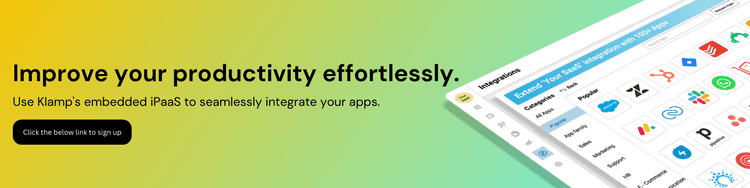
Utilizing technologies such as Klamp embedded iPaaS can assist firms in effortlessly integrating and optimizing their processes. By utilizing these technologies, firms may maintain their competitiveness and stimulate expansion in the ever-changing technological environment.
For more info on easy automation solutions visit Klamp Embed & Klamp Connectors