
Guide to the Power of JSONata

Table of Contents
JSON data is crucial for developers and data analysts. JSONata is a powerful tool designed to simplify this process, offering simplicity, flexibility, and high performance. This guide will take you through the essential features of JSONata and how it can streamline your data workflows. We will also explore how klamp.io can help you in using JSONata to its fullest potential.
JSONata
JSONata is a lightweight query and transformation language for JSON data. It allows you to extract and manipulate data within JSON documents with ease. Unlike traditional query languages, JSONata is designed specifically for JSON, making it an excellent choice for tasks that involve JSON data processing.
Click here learn about JSON forms for SaaS application
Key Features of JSONata
- Querying: JSONata allows you to query JSON data with a syntax that is both powerful and easy to learn.
- Transformation: You can transform JSON data structures, creating new JSON objects or arrays based on your specific requirements.
- Expressions: JSONata supports a rich set of expressions for string manipulation, arithmetic operations, and more.
- Functions: It provides built-in functions for common tasks and allows you to define your own custom functions.
Why Use JSONata?
Simplicity and Flexibility
JSONata’s syntax is straightforward, making it accessible for both beginners and experienced developers. Its flexibility allows you to handle a wide range of data manipulation tasks, from simple filtering to complex transformations.
Performance
JSONata is customized for performance, ensuring that your queries and transformations are executed quickly and efficiently. This makes it suitable for real-time data processing applications.
Integration with klamp.io
klamp.io is a platform that helps users integrate and use tools like JSONata in their workflows. With klamp.io, you can easily incorporate JSONata into your data processing pipelines, gaining expert guidance and solutions to your needs. Nata?
Getting Started with JSONata
Basic Syntax
Here’s a quick overview of JSONata’s basic syntax:
- Selecting Fields: Use the ‘.’ operator to select fields. For example, ‘ data.name’ selects the name field from the data object.
- Filtering: Use the ‘[]’ operator to filter arrays. For example,’ data.items[price > 10]’ selects items with a price greater than 10.
- Transformations: Use the ‘{}’ notation to create new objects. For example, ‘{"name": data.name, "cost": data.price * 1.2}’ creates a new object with modified fields.
Example Query
Consider the following JSON data:
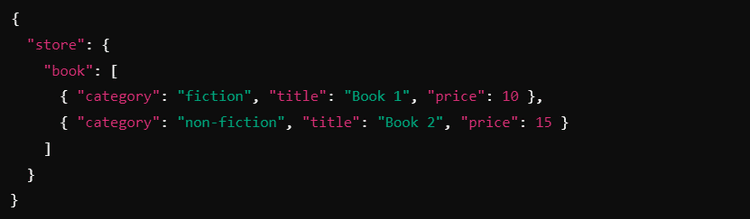
To select all fiction books, you can use the query:

Functions
JSONata provides built-in functions for various tasks, such as ‘sum()’, ‘max()’, and ‘substring()’. You can also define your own custom functions for more complex operations.
Grouping and Aggregation
To group data by a specific field and apply an aggregate function, you can use the ‘groupBy ‘and ‘sum’ functions. For example:

Use Cases for JSONata
Data Transformation
JSONata is ideal for transforming JSON data into new formats. For example, you can convert data from an API response into a format suitable for your application.
Data Validation
You can use JSONata to confirm JSON data against specific criteria, ensuring data quality and consistency.
Real-Time Data Processing
JSONata’s performance makes it suitable for real-time data processing applications, such as streaming data pipelines and event-driven architectures.
Integrating JSONata with klamp.io
klamp.io provides a platform for integrating JSONata into your workflows. Here’s how klamps.io can help: link
Seamless Integration
With klamp.io, you can easily integrate JSONata into your existing data processing pipelines, whether you are working with APIs, databases, or other data sources.
Custom Solutions
klamp.io provides automation solutions to your specific needs, ensuring that you get the most out of JSONata.
For more info on easy automation solutions visit Klamp Embed & Klamp Connectors