
Process Automation
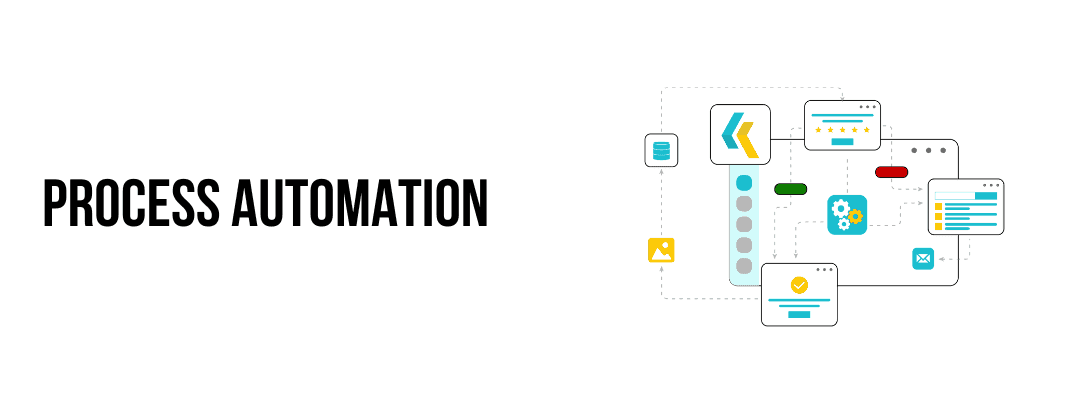
Table of Contents
What Is Process Automation?
Process automation is the use of technology to perform repetitive, rule-based tasks or workflows with minimal human intervention. It aims to streamline operations, increase efficiency, reduce errors, and free up employees to focus on higher-value activities. Process automation can be applied across various industries and functions, from manufacturing and customer support to finance and human resources.
Types of Process Automation
Robotic Process Automation (RPA):
Uses software robots (bots) to mimic human actions like clicking, typing, or navigating applications.
Business Process Automation (BPA):
Focuses on automating end-to-end business processes to optimize workflows and enhance productivity.
Intelligent Process Automation (IPA):
Combines RPA with AI and machine learning to handle more complex, cognitive tasks.
Applications of Process Automation
Finance: Automating invoice processing, expense management, and payroll.
Human Resources: Streamlining employee onboarding, leave approvals, and performance reviews.
Customer Service: Automating responses to FAQs, ticket routing, and feedback collection.
Supply Chain: Optimizing order processing, inventory management, and logistics.
IT Operations: Automating software updates, server monitoring, and incident resolution.
Business Process Automation (BPA) and Digital Transformation
Business Process Automation (BPA) and digital transformation are interconnected concepts that drive efficiency, innovation, and growth in modern organizations. While BPA focuses on automating repetitive tasks and streamlining workflows, digital transformation encompasses the broader integration of digital technologies into all aspects of a business, fundamentally reshaping how it operates and delivers value to customers.
What Is Business Process Automation (BPA)?
BPA refers to the use of technology to automate routine, manual tasks within business workflows. It aims to improve efficiency, reduce errors, and enhance process consistency by replacing manual interventions with automated systems.
Features of BPA
- Automates workflows such as invoicing, approvals, and data entry.
- Integrates applications and systems to enable seamless data flow.
- Enhances compliance by maintaining standardized processes.
- Monitors and reports performance metrics in real-time.
What Is Digital Transformation?
Digital transformation involves leveraging digital technologies to revolutionize a business’s operations, culture, and customer experiences. It goes beyond automating individual tasks, focusing instead on reimagining entire business models and strategies.
Features of Digital Transformation:
- Enhances customer experiences with personalized, data-driven solutions.
- Encourages innovation through the adoption of advanced technologies like AI, cloud computing, and IoT.
- Improves agility, enabling businesses to adapt quickly to market changes.
- Aligns people, processes, and technology to achieve strategic goals.
The Connection Between BPA and Digital Transformation
BPA serves as a foundational component of digital transformation, helping businesses achieve scalable and efficient digital workflows. It automates repetitive tasks, freeing up resources for strategic initiatives and enabling organizations to reimagine processes for a digital-first approach.
How BPA Drives Digital Transformation:
Streamlined Processes: BPA eliminates inefficiencies, ensuring smoother operations essential for digital transformation.
- Automating data exchange, BPA ensures accurate and real-time information sharing.
- Automation reduces manual effort, allowing employees to focus on innovation and strategy.
- BPA enables quick adjustments to processes, supporting the dynamic nature of digital transformation.
- BPA reduces the time spent on routine tasks, enabling teams to explore new technologies and ideas.
Benefits of Combining BPA with Digital Transformation
- Automation eliminates bottlenecks and reduces errors, improving overall performance.
- BPA reduces manual workload and operational costs, making digital transformation initiatives more sustainable.
- Integrated and automated workflows provide faster, more personalized customer interactions.
- Automated processes generate insights that guide strategic decisions.
- BPA supports business growth by enabling processes to adapt to increasing demands.
Applications of BPA in Digital Transformation
Finance: Automating expense management, invoice processing, and financial reporting.
HR: Streamlining onboarding, leave approvals, and performance management.
Customer Service: Automating ticket routing, chatbot responses, and feedback collection.
Supply Chain: Enhancing order processing, inventory tracking, and logistics coordination.
Marketing: Automating email campaigns, lead nurturing, and analytics.
Process Automation: Steps in Your Digital Transformation Journey
Achieving complete process automation is a critical element of any successful digital transformation. A recent McKinsey survey of industry leaders who have effectively met their business process automation objectives revealed that these successes shared three key strategic components:
Automation as an Organization-Wide Priority:
Automation should be approached as a strategic initiative across the entire organization, rather than being handled in isolated silos to address individual processes.
Technology that Serves People:
The focus of process automation should be on ensuring that the technology works for people, making their tasks easier and more efficient, not the other way around.
Scalability for Long-Term Success:
Given the current market volatility, emphasizing scalability is crucial for maintaining long-term success in process automation.
As with any business transformation, process automation doesn’t need to be implemented all at once. The most critical first step is to prepare for managing change effectively, clearly communicating well-defined goals, and setting milestones for your entire workforce.
Using embedded integration, Klamp automates its apps in 3 days. Book a meeting now.
Recommended reading:
For more info on easy automation solutions visit Klamp Embed & Klamp Connectors