
Advantages of Native Integration
Table of Contents
The software-as-a-service (SaaS) trend has led to a higher demand for seamless integration between different programs. As more businesses opt for cloud-based software solutions, they expect these programs to work together smoothly.
The demand for seamless integration between different applications has become increasingly crucial. This is where native integrations step in, offering a solution to the challenge of connecting disparate systems and enabling efficient data flow across various platforms.
What is a Native integration?
- Native integration typically refers to the seamless integration of one system or software application with another in a way that is inherently supported or built-in by design. This means that the integration is part of the core functionality of the systems involved, rather than being achieved through third-party plugins, custom code, or middleware.
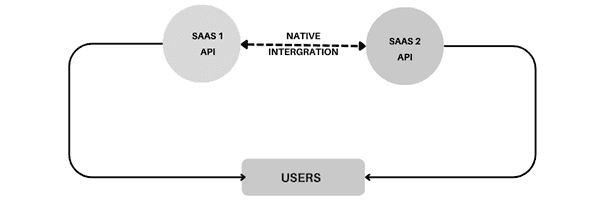
- For example, consider a project management SaaS platform that offers built-in integrations with popular file storage services like Google Drive and Dropbox. With native integrations users can effortlessly attach files from their preferred storage solution to project tasks and collaborate with team members in real-time, without having to switch between different applications or navigate complex integration settings. This communication occurs between machines or systems connected through a network and takes place within the user's SaaS environment.
- Native integrations can be created internally by a company or through an embedded Integration Platform as a Service (iPaaS), offering users’ tools to develop and implement in-app integrations.
What are the benefits of Native Integration?
Native integrations offer several benefits to businesses, including:
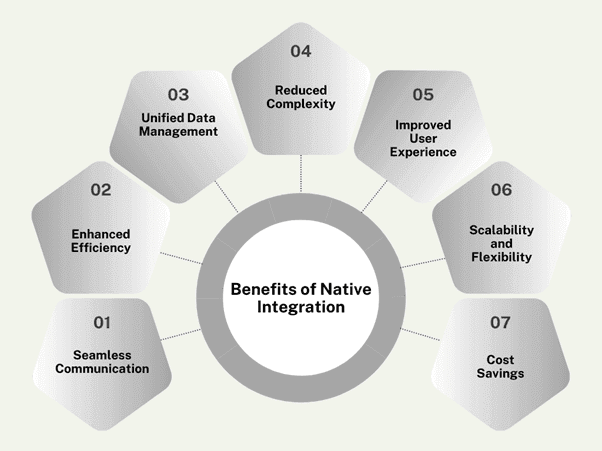
- Seamless Communication: Native integrations facilitate direct and seamless communication between different software applications. This ensures smooth data flow without the need for manual intervention, reducing errors and improving efficiency.
- Enhanced Efficiency: By automating processes and eliminating the need to switch between multiple platforms, native integrations help teams work more efficiently. This saves time and resources, allowing employees to focus on core tasks and boosting overall productivity.
- Unified Data Management: Native integrations centralize data within a unified ecosystem, enabling easy access and real-time updates across various applications. This promotes data consistency, accuracy, and better decision-making.
- Reduced Complexity: Integrating applications natively simplifies the technological landscape for businesses, reducing the complexity associated with managing multiple tools and systems. This streamlines operations and minimizes technical challenges.
- Improved User Experience: Native integrations provide a seamless user experience with intuitive workflows and minimal disruptions. This enhances user satisfaction, encourages adoption, and fosters collaboration across teams.
- Scalability and Flexibility: Native integrations are designed to adapt to the evolving needs of businesses, offering scalability and flexibility to accommodate growth and changes in operations. This ensures that the integration remains effective over time.
Cost Savings: By eliminating the need for custom development or third-party solutions, native integrations help businesses reduce costs associated with software implementation, maintenance, and scaling IT infrastructure.
Overall, native integrations play a crucial role in optimizing business processes, driving innovation, and enabling organizations to stay competitive in today's dynamic market landscape.
How can native integrations be accomplished?
- When you subscribe to a SaaS product, it typically comes with built-in native integration functionality provided by the parent company and their development teams. However, their primary focus is often on improving their core product rather than refining integration features.
- These pre-built integrations may not always offer the level of customization or specific use cases you need. This is why creating your own native integrations can be enticing, despite requiring significant time and resources. While they can be highly tailored, they may lack scalability and agility.
- Embedded Integration Platform as a Service (iPaaS) solutions offer a solution. They enable you to swiftly develop native integrations using low-code or no-code tools within your SaaS environment, allowing your users to easily install and implement them. This means your SaaS product can include all the necessary native integration capabilities for your customers without the burden of extensive development efforts.
Embedded iPaaS Platforms for Native Integrations
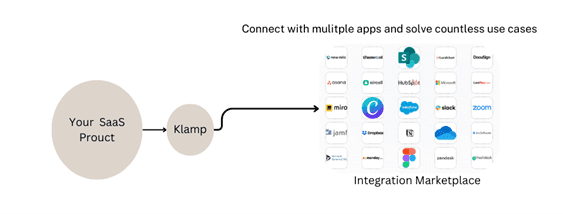
- Harnessing an embedded iPaaS (Integration Platform as a Service) solution for crafting native integrations presents a myriad of benefits.
- By opting for such a platform, you gain efficiency through pre-existing tools, scalability to accommodate evolving needs, extensive customization capabilities, user-friendly interfaces for seamless operation, integration harmony within your SaaS ecosystem, cost-effectiveness in contrast to starting from square one, and a competitive edge by augmenting value for your clientele.
With Klamp embed, you can seamlessly provide native integrations to your users within your SaaS platform, enabling them to swiftly connect essential apps without leaving your interface. Our solution, along with a variety of plans, empowers you to offer embedded integrations to your customers in mere minutes. This expedites your product roadmap and diminishes technical debt. To delve deeper into offering integration capabilities to your customers through your platform, request a demo today!
For more info on easy automation solutions visit Klamp Embed & Klamp Connectors